Tech Behind the Table: Adapting Live Dealer Casino Streams to Every Screen Size and Bandwidth
Written by Rafael Günther · Jul 25, 2026
Tech Behind the Table: Adapting Live Dealer Casino Streams to Every Screen Size and Bandwidth
Developers working on live dealer platforms face constant demands to deliver smooth blackjack, roulette, and baccarat sessions whether users sit at large desktop monitors or hold compact smartphones, and data from the American Gaming Association shows remote play volumes continued climbing through mid-2026. Teams break the challenge into layers that address both visual layout and video delivery, using techniques that adjust automatically as players switch networks or rotate devices. In July 2026 several major platforms rolled out updates that refined these systems further, incorporating feedback from millions of active sessions across Europe, North America, and Asia-Pacific markets.
Responsive Layouts That Preserve Table Visibility
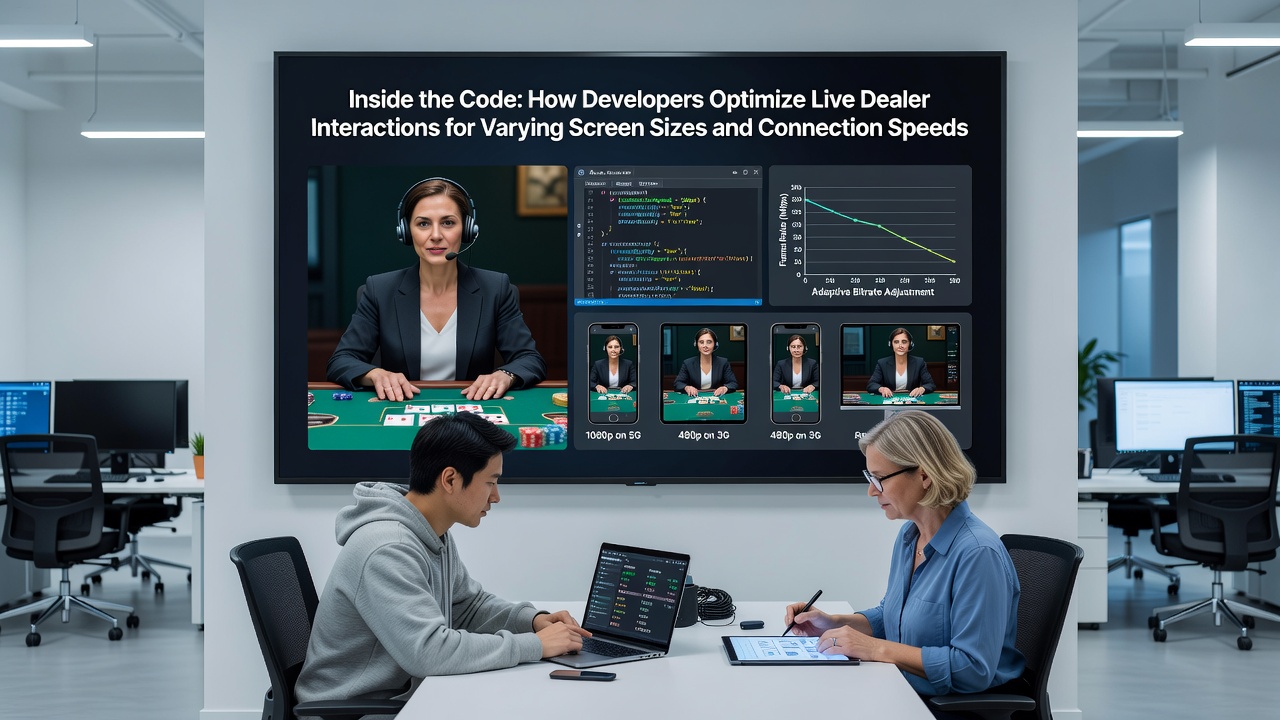
Screen dimensions vary widely, from 6-inch phones to 27-inch monitors, so engineers rely on fluid grids and relative units rather than fixed pixel values to keep the dealer, cards, and betting chips proportionally sized. Media queries detect orientation changes in real time, shifting from landscape to portrait without cropping the main video feed or hiding controls, while vector-based overlays maintain sharp edges on high-resolution displays. Observers note that frameworks built around CSS flexbox and grid allow a single codebase to serve multiple breakpoints, reducing maintenance overhead and ensuring the live stream window remains the dominant element even on tablets held sideways.
Adaptive Streaming for Fluctuating Connections
Connection speeds swing from strong 5G to congested public Wi-Fi or older 4G towers, prompting developers to implement dynamic bitrate ladders that switch between 1080p, 720p, and lower resolutions within seconds. Protocols such as WebRTC handle teh negotiation, testing available bandwidth every few moments and selecting the next segment without interrupting the dealer’s actions, and studies from the University of Melbourne’s Centre for Digital Transformation indicate that such adjustments cut buffering events by measurable margins in field trials. Compression algorithms tuned for gaming footage further reduce data payload while preserving facial details and card markings that players rely on for decisions.
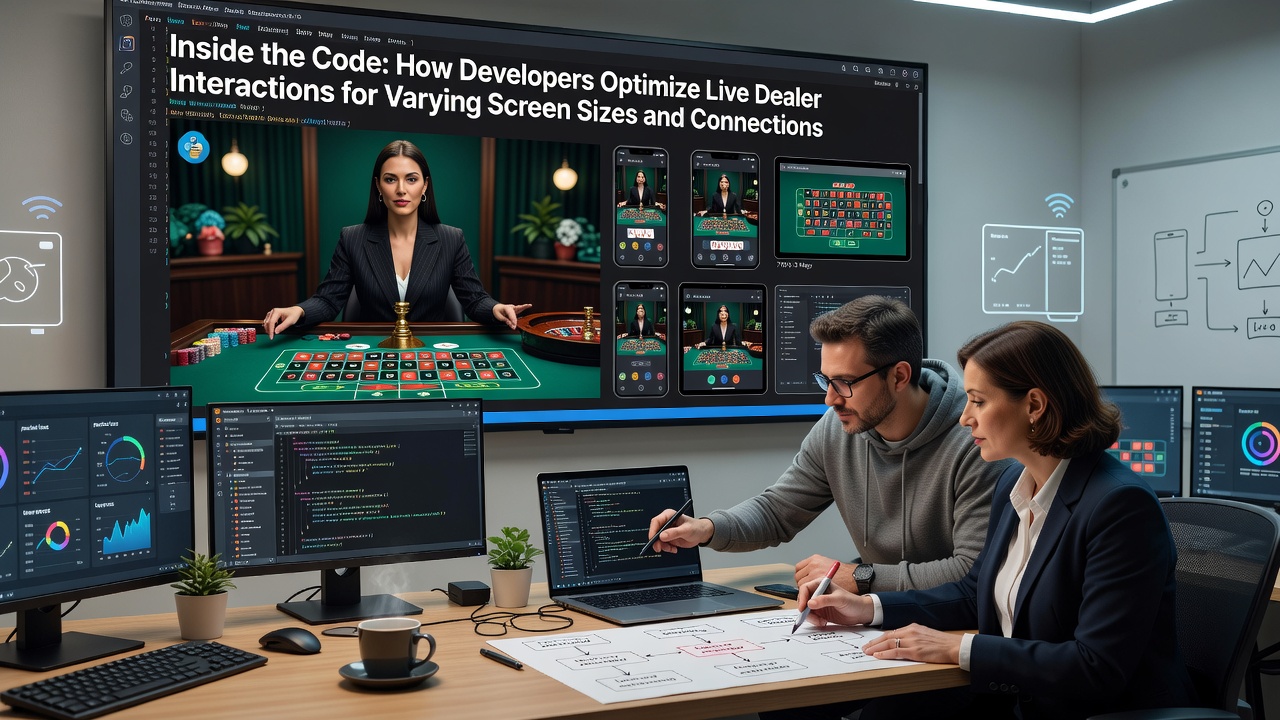
Those who maintain these systems often integrate content delivery networks with edge nodes positioned closer to players, shortening the path the video packets travel and lowering latency during peak evening hours. When signal quality drops, the client application lowers frame rates temporarily instead of freezing the stream, then ramps quality back up once conditions stabilize, giving users a continuous experience rather than repeated loading indicators.
Device-Specific Rendering and Touch Optimization
Mobile hardware presents additional constraints because processors and memory differ between budget Android models and flagship iOS devices, so developers profile performance across representative hardware and apply conditional rendering paths. On lower-end chips the system may simplify particle effects on chip stacks or reduce the number of simultaneous camera angles, while high-end units receive full graphical fidelity. Touch targets expand automatically on smaller screens to accommodate finger input, and gesture controls replace mouse hovers so that placing bets or requesting cards feels consistent across platforms.
Testing Regimes That Mirror Real-World Conditions
Quality assurance teams run automated suites that simulate thousands of device-and-network combinations, logging how the interface and stream behave under throttled bandwidth or sudden signal loss. Manual testing on actual hardware in different regions supplements these runs, revealing edge cases such as older operating systems that handle video codecs differently. Reports compiled by the Canadian Gaming Association highlight that operators investing in comprehensive device labs see fewer post-launch support tickets related to display or playback issues.
Future-Proofing Through Modular Architecture
Modular codebases let teams swap individual components, whether a new video codec emerges or a fresh screen-size category appears, without rebuilding the entire application. Feature flags allow gradual rollout of optimizations, letting operators monitor performance metrics before full deployment. This approach supports the ongoing expansion of live dealer offerings documented across multiple jurisdictions in 2026, keeping experiences reliable even as player expectations and network technologies continue to evolve.
Conclusion
The combination of responsive design principles, adaptive video delivery, hardware-aware rendering, and rigorous testing produces live dealer sessions that remain accessible and responsive regardless of the device or connection in use. As platforms continue refining these systems, the underlying code ensures that the core interaction between player and dealer stays intact across an expanding range of conditions.